
FAQs
Want to know more?
Consider these stereotypes and truths:
>They’re lazy and don’t want to work: Most unhoused individuals want to work but face barriers like lack of ID, childcare, and transportation. Many suffer from a disability and cannot access benefits or they aren’t enough to live on. Many face discrimination. Begging/panhandling is not easy. It is demoralizing and we know many more who cannot bring themselves to do it. It is an effort to work and earn something, especially if they are selling Curbside Chronicle. Many DO work, but do not earn enough to afford housing. We don’t have a living wage. It’s hard to work when you don’t sleep or eat well, can’t shower, don’t have clean clothes. Try to imagine for a few minutes what it would feel like for you to be in these situations.
>So what do I do when I see someone begging? First, remind yourself that whatever else this individual is, s/he is first a human made in the image of God and very much loved. Second, no matter what role they played in getting to this situation, society has not sufficiently helped. Smile, acknowledge them. We don’t need to feel guilty for what we have, we should just want that for everyone. If you cannot help, you can say “Sorry I can’t help today, but good luck.” Beyond that, do what you can. If that is a bottle of water, a couple dollars, a care bag; giftcards to common local fast food restraunts are great because they effectively buy real estate too. We are taught the person probably wants booze or drugs. That’s mostly not true, but it also might be. Our call is to acknowledge need, love, give, and the rest is not up to us. We must not compare the best of me to the worst of you. Check out this recent newsletter I wrote about these issues: Complaining is human. So is grace.

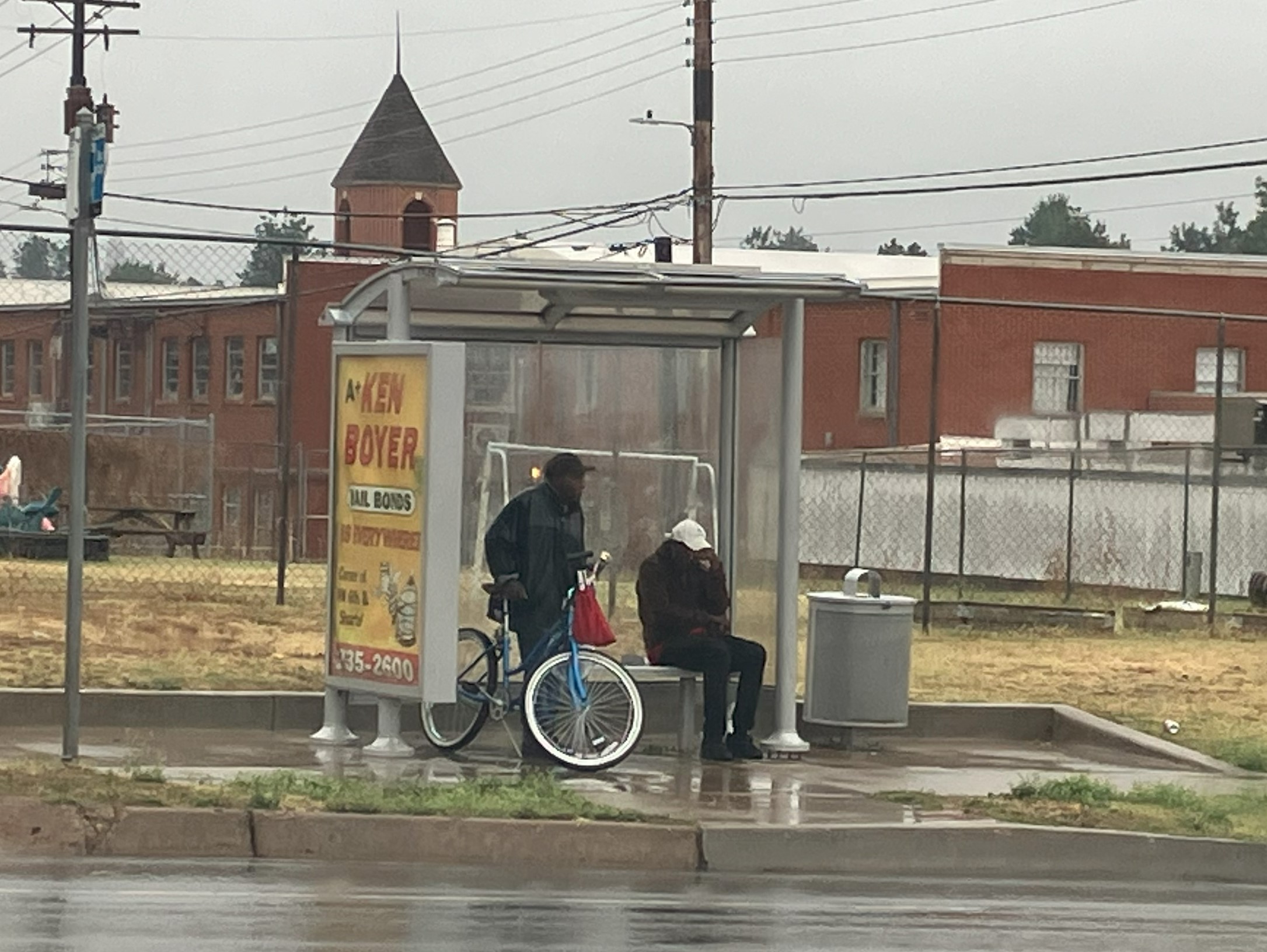


>They’re addicts or alcoholics: Substance use is often a response to trauma and pain; Statistically not the cause of homelessness. Substance use rates are close to the general population. Many more individuals with sufficient financial and social resources will not become homeless because of mental heath issues. Drug use IS a contributing factor, but homelessness also increases drug use. Individuals use drugs to cope: both to stay awake or to sleep. In a recent study in California, contrary to common perception, only about 37% of homeless people were using illicit drugs regularly, and 25% said they had never used drugs. “One of the most poignant findings was that 1 in 5 told us they are actively seeking treatment and couldn’t get it.” At what rate do rehab, detox, or mental health treatments affect outcomes for unhoused persons required to enter them? In a study comparing Housing First to Treatment First programs, there was no difference in the outcome of who still used substances and who didn’t. Relapse rates are incredibly high. Requiring sobriety did not produce sobriety in the program’s participants: it produced only “dropouts, i.e. people sent back to the streets for failing to comply. Forced treatment almost never sticks.
>They’re all mentally ill: Deteriorating mental health is a result of the trauma of being homeless, not the cause. Mental illness rates are close to the general population. UNTREATED mental illness is a contributing factor, but homelessness causes and worsens mental illness. Living on the streets is traumatic! Access to affordable healthcare has a huge impact on an individuals ability to treat mental illness and remain housed and employed. Many more individuals with sufficient financial and social resources will not become homeless because of mental health issues.
>They chose to be homeless: 93% of unsheltered individuals in OKC in the last 3 years have accepted housing and services. Housing and trauma-informed resources work. People can and do recover. For those who “choose homelessness” they are choosing the least harmful option based on their experience. No one truly wants to be homeless: what must a person have been through and be experiencing to believe living outside is their best option?
>They’re all the same: Homelessness affects families, veterans, seniors, and youth of all backgrounds. Every experience is unique. The populations experiencing increasing rates of homelessness are seniors over 60 and youth under the age of 25. There are millions of families who are not stably housed and move from place to place and whose children do not have permanent addresses. What you see driving through our city is just the tip of what homelessness really is.
>They’re responsible for their bad choices: Our society has given millions of people limited options that cannot be simply labeled as bad choices. Compounded trauma from generational poverty, discrimination, underfunded schools, weak social networks, and lack of access to support services leads to homelessness. These systemic barriers drive homelessness and individuals persist though incredible conditions. Individuals with sufficient financial and social resources will remain housed despite bad choices, drug use, and mental health issues.
>They’re dirty, diseased, and a nuisance: Lack of hygiene reflects a lack of access, rest, privacy, and dignity. Access to public utilities is only through housing. The city provides running water, electricity, gas, and trash service right to your door. So if you don’t have a door…
>They’re untrustworthy and manipulative: Facing daily danger takes strength and survival-trauma changes us all. Ask yourself- what would you do to survive? Many of our friends share their stories and say to the effect of, “this is not who I was before.”
>Some individuals are seen as “service resistant.” For many reasons, unhoused individuals may choose not to stay in the downtown area or in a shelter and we should consider these valid reasons (no particular order):
1- fear of being moved to an unfamiliar place, 2- bad reputation of shelters (programs, religion), 3- policies and curfews can be are patronizing, 4- they have suffered let downs, technicalities, and broken trust, 5- maybe they don’t trust YOU (ex: police), 6- mental illness causes distrust and confusion, 7- high barrier services don’t accommodate drug use, gender issues, queer identities, partners staying together, having a pet, 8- overcrowding causes anxiety
Consider these facts:
>What state boasts the lowest cost of living in the US and also has the lowest rate of homelessness? Mississippi: when people in Mississippi experience a risk factor, rent remains affordable, so homelessness is avoided, and this stability affords people the means to alleviate their other concerns.
>Lack of affordable housing: Median gross rent in Oklahoma has risen by over 70% since 2019. Today, a minimum-wage worker has to work 80+ hours to afford a one-bedroom apartment. Imagine a game of musical chairs. When a chair is removed, the person on crutches is going to be left out. The CAUSE of his chairlessness is a lack of chairs, not his injury. The rules mean SOMEONE is always going to lose. According to the OK Policy Institute, “For every 100 extremely low-income Oklahoma renter households, the state only has 42 rentals that are available and affordable. The state needs another 77,000 rental units for extremely low-income renters (less than around $23,000/yr for a family of four) to have enough housing to go around.” Minimum wage workers cannot afford rent in any US State – Alicia Adamczyk, cnbc.com
>What percentage of the total US population will experience homelessness at least once? 5% of the population will be unhoused at some point in their life. The current population of the United States of America as of Wednesday, March 5, 2025 is 346,674,643. Based on Worldometer’s elaboration of the latest United Nations data, 5% is 17,333,732 of the current population.
>Relationship loss leads to homelessness. The risk is greater for people with limited support from family and community. The majority of the unhoused population had experienced some type of loss. 50% said “relational breakdowns,” like separation, divorce, and death, contributed to their “housing instability.” New study reveals unifying theme behind homelessness — and it’s not drug use.
>Link between race and homelessness: Four forms of social exclusion provide the link between race and homelessness: low incomes, less generational wealth accumulation, housing discrimination, higher rates of incarceration.
>Eviction rates: 13 of every 100 renters in OK County was served an eviction notice in the last year. 48.6% of the county is rent burdened, i.e. 30%+ of income for rent and utilities. County poverty rate is 15.7%, National average is 11%. Unaffordable housing and evictions lead to homelessness. And keep in mind people are evicted for lots of reasons unrelated to ability to pay. We are dealing with a chain reaction – a housing shortage means prices go up, so it’s harder to afford housing at any level. This most affects low income households. But also, at the upper levels, if there is a financial change in the household they can downsize several times if necessary, and move from owning to renting. Higher qualified renters enables landlords to be selective about who they rent to, so low income families are denied or only have options in the worst quality housing.
>The US average taxpayer in 2024 contributed: $3,707 towards war and weapons, $1,430 to Pentagon contractors, $3,452 for national debt interest, $39 for USAID, $26 for refugee assistance, and $0.01 towards homeless prevention. Wars make international conflict and refugees, but we don’t want to support society either there or here.
How homelessness services in OKC works:
The coordinated homelessness services program in OKC is called Key to Home. Read more about Key to Home. Key to Home coordinates cohesive strategy implementation with all the homelessness service providers in the City.
Housing First – Key to Home is a “housing first” strategy. Housing First does not require people experiencing homelessness to address the all of their problems including behavioral health problems, or to graduate through a series of services programs before they can access housing. Housing First does not mandate participation in services either before obtaining housing or in order to retain housing. The Housing First approach views housing as the foundation for life improvement and enables access to permanent housing without prerequisites or conditions beyond those of a typical renter. Supportive services are offered to support people with housing stability and individual well-being, but participation is not required as services have been found to be more effective when a person chooses to engage.
Homelessness is a Housing Problem every unhoused individual’s experience of homelessness is unique, and therefor their solution is unique. There are multi-faceted issues to address. But the solution to homelessness is HOUSING, undeniably, statistically, factually.
Point in Time Count OKC-Key to Home is a federal HUD (Housing and Urban Development) recipient for homelessness services funding. Which includes the requirement to conduct an annual ‘Point in Time Count.’ This count is done in late January every year to estimate how many unhoused individuals are within the OKC limits. It does not include any other city in the metro. It is done in January because the majority of unhoused individuals will be inside a shelter if they can be, which is easier to count. Teams disperse all over the city to count how many individuals for whatever reason remain unsheltered. The 2026 number is 1,867. To see the whole report: OKC 2026 Point in Time Count Report.
Goals of Key to Home: 1) Reduce inflow into the homelessness pipeline 2) targeted intervention to reduce “long term stayers” 3) expand housing access
“Chronic homelessness” is a specific HUD term: at least 12 months or on at least 4 separate occasions in the last 3 years.
Rehousing Encampment Initiative teams: Key to Home operates 5 full time street outreach teams, each based out of one of the service provider organizations and operating in a specific geographical zone. These teams are dedicated specifically to engage with encampments of 3+ people, enroll them into the coordinated entry system, and facilitate paperwork and requirements to be put on the housing list. These teams primarily rehouse chronically unhoused individuals into permanent supportive housing with assigned case workers. The ERI team that operates in NW OKC is based at the Homeless Alliance and Micah partners with the team as needed to assist with individuals in the program.
The coordinated efforts of Key to Home are working! But homelessness continues to grow. The official number is a 1% decrease over a year ago. The year before saw a 2.4% increase and in 2024 the increase was 28%. The important nuance that these numbers does not reflect is that Key to Home collectively has housed over 500 people in the last year two years. So individuals being house are being replaced with new people coming into the system.
Homeless Diversion: Now that Key to Home has been operational for two years, progress is being made, and data has been collected. The emphasis now turns to solving the problem of inflow. OKC has more people coming into the homelessness pipeline than exiting it. It is like a funnel, a wide entry point, with too narrow of an exit strategy, being clogged by the increasing numbers of chronically unhoused. Prevention and Diversion efforts are ramping up to rapidly rehouse people in their first few months that have never been unhoused before.
Landlord engagement team: Key to Home has launched a team to work with landlords in the city to negotiate taking previously unhoused individuals, removing barriers, and in some cases paying a risk fee to give a tenant a chance.
Updated Zoning laws and Accessory Dwelling Units: we cannot expand available housing without changing zoning laws and agreeing to share space. Read these two pages for details: Development Codes Update, Accessory Dwellings.
There are two kinds of service centers: Low barrier and high barrier. Low barrier means there are as few requirements as possible to receive services. Homeless Alliance, City Care, Joe’s Addiction Coffee shop, Lottie House, Catholic Charities Women’s Sanctuary, and the Micah Center are examples of low barrier services: sobriety is not required, pets can come along, etc. Examples of high barrier centers are City Rescue Mission, Salvation Army, and Jesus House that offer programs requiring enrollment and restrict personal behaviors, etc.
The Micah Center was welcomed into the Key to Home system as a low barrier provider! We operate the only homelessness services facility west of 1-44. The Community Center is a drop-in day-shelter that provides: a safe indoor place for rest and community, meals, bathrooms and showers, laundry and more! Our long term goal is to provide office space for city service providers to meet with clients and expand available day-shelter space for an overburdened system, localize service providers, and bring currently under-resourced neighbors into the system to remove barriers and provide stabilizing services that lead to housing.
Check out our Resources page for books, articles, podcasts, etc to learn more about homelessness. The number one thing I want everyone to do is read Grace Can Lead Us Home – A Christian Call to End Homelessness, by Kevin Nye. This book is wide and deep and covers all the issues. It challenges our preconceived ideas, guides us in better ways to posture ourselves, and clarifies what needs to be done to resolve homelessness. I cannot say strongly enough that you need to read (or listen!) to this book.